Oral Sphere
Journal of Dental and Health Sciences

Journal of Dental and Health Sciences
Received: 2025-01-04
Accepted: 2025-03-24
Published: 2025-04-01
Pages: 116-122
By improving accessibility, efficiency, and accuracy, emerging diagnostics and teledentistry are enhancing dental care and other branches of healthcare as well. This article examines how remote consultations and AI-based diagnostics facilitate teledentistry, thereby reducing oral healthcare disparities in disadvantaged communities. By utilizing this approach to enhance early disease detection and treatment planning, extremely accurate diagnosis techniques improve patient outcomes by reducing the requirement for invasive treatments. Teledentistry and Intelligent Diagnostic Devices enable dental care to be more proactive and patient-focused as technology advances.
In dentistry and many other fields of healthcare, digital technology has undergone significant changes in recent years as components of innovative diagnostics and teledentistry, remote consultations, AI-driven diagnostics, and high-tech imaging technology demonstrate innovative approaches to enhancing patient comfort and care. They all simultaneously improve patient outcomes, diagnosis, treatment planning, and access to dental services. Teledentistry, along with digital diagnostics, reflects a significant shift toward more proactive and patient-centered practice [1]. Teledentistry is defined as distant dental care provided with the aid of digital technologies and telecommunication equipment. It encompasses electronic health records, video conferences between dental practitioners, distant monitoring, and real-time collaboration [2]. The universal availability of smartphones, high-speed data, and imaging technology has made teledentistry a viable alternative to the limitations of on-site dental consultations [3]. For individuals living in rural, backward areas where they lack access to dental specialists, it has been beneficial. Teledentistry enables patients to receive follow-up care, preventive advice, and timely consultations, thereby reducing the burden on healthcare centers and enhancing patient satisfaction [4]. Dental radiography, intraoral scanners, digital radiography, and innovative diagnostics are revolutionizing dental diagnosis through the use of AI-powered imaging technologies. These products provide precise readings in real-time, which may enable early detection of dental ailments such as cavities, periodontal disease, and oral cancer [5]. Through meticulous examination of large volumes of dental data, professionals can identify irregularities that would be missed by routine screening. Machine learning models that can offer customized treatment strategies and predict the progression of an illness provide a successful and evidence-based approach to dental treatments [6]. Improving preventive care is a key benefit of combining innovative diagnostics with teledentistry. Many dental issues, when caught early, can be treated with less invasive procedures, which reduces overall healthcare costs and prevents complications. Devices such as smart toothbrushes and wearable oral health sensors enable patients to monitor their dental hygiene and receive real-time feedback from their dentist. This not only helps patients maintain better oral health but also allows dental professionals to take proactive me asures when signs of potential problems arise [7]. Despite their numerous benefits, the adoption of teledentistry and smart diagnostics presents several challenges, including regulatory concerns, data security, and the need for standardized protocols. The priority is maintaining the privacy and security of patient data, as telehealth systems must adhere to strict regulations, such as the Health Insurance Portability and Accountability Act (HIPAA) in the United States. Moreover, dental experts and patients must be suitably qualified to utilize these technologies effectively. Maximizing the opportunities of teledentistry and smart diagnostics in patient care depends on addressing these issues through policy development, technological improvements, and education [8]. At last, teledentistry and smart diagnosis technologies represent a paradigm shift in dental treatment, therefore enhancing patientcentricity, access, and efficiency. As digital solutions are integrated with advancing technology, their impact on the direction of dentistry will be significant, leading to improvements in early diagnosis, treatment accuracy, and overall patient experiences. This study examines the current advances, benefits, and challenges associated with these technologies, as well as their potential to transform the field of dental therapy.
This review methodically investigates the effect of smart diagnostic technologies and teledentistry on patient care. The approach involves a thorough assessment of the literature, data collection from reliable sources, and a qualitative analysis of the results to evaluate the advantages, challenges, and prospects of these technologies in the field of dentistry.
To compile pertinent data on teledentistry and smart diagnostic technologies, a thorough review of the existing research was conducted. Analyzed were scientific publications, peer-reviewed papers, conference proceedings, and official healthcare reports to grasp the present developments, innovations, and uses of these technologies in dental treatment. The databases used in this study include ScienceDirect, IEEE Xplore Digital Library, Google Scholar, and PubMed. Relevant research articles were screened using keywords including "teledentistry," "AI in dentistry," "smart diagnostic tools," "remote dental care," and "digital oral health." Included to guarantee current information were that research released throughout the past ten years.
Studies relevant depending on particular inclusion and exclusion criteria were chosen. The inclusion guidelines comprised:
Research on the use of smart diagnostic instruments and teledentistry in clinical settings.
Studies with an eye on telehealth applications, AI- driven diagnostics, and how they affect patient outcomes.
Papers tackling the difficulties and restrictions related to this technology.
Research devoid of actual data or emphasizing irrelevant facets of dental technology.
Research published before 2013 unless judged especially relevant for historical background.
Articles lacking in complete text availability. Qualitative Examination Qualitative analysis of the gathered data helped to assess the usefulness and pragmatic applications of smart diagnosis tools and teledentistry.
The study concentrated on: These technologies' effect on the affordability and accessibility of dental care. Their role in early diagnosis, treatment scheduling, and preventive dental work. AI integration to raise diagnosis accuracy. The application faces difficulties due to technological and legal constraints. Results were compiled to identify key patterns, research gaps, and potential future directions for improvement. A comparative study was also conducted to highlight variations in the acceptance and effectiveness of these technologies across different areas and medical systems.
Since this study drew on secondary research, ethical approval was not needed. To guarantee academic integrity, all sources were meticulously quoted and properly referenced. Every possible bias in the examined research was carefully evaluated to preserve the objectivity of the results.
The reliance on current literature in this evaluation limits its ability to accurately capture real-time developments in rapidly evolving dental technologies. Furthermore, differences in healthcare infrastructure around various areas could affect the relevance of particular conclusions. Clinical trials and real-world case studies should be included in future studies to understand the impact of these technologies fully. This paper presents a well-organized and perceptive examination of how teledentistry and smart diagnostic technologies are revolutionizing patient care in contemporary dentistry, employing this methodological approach.
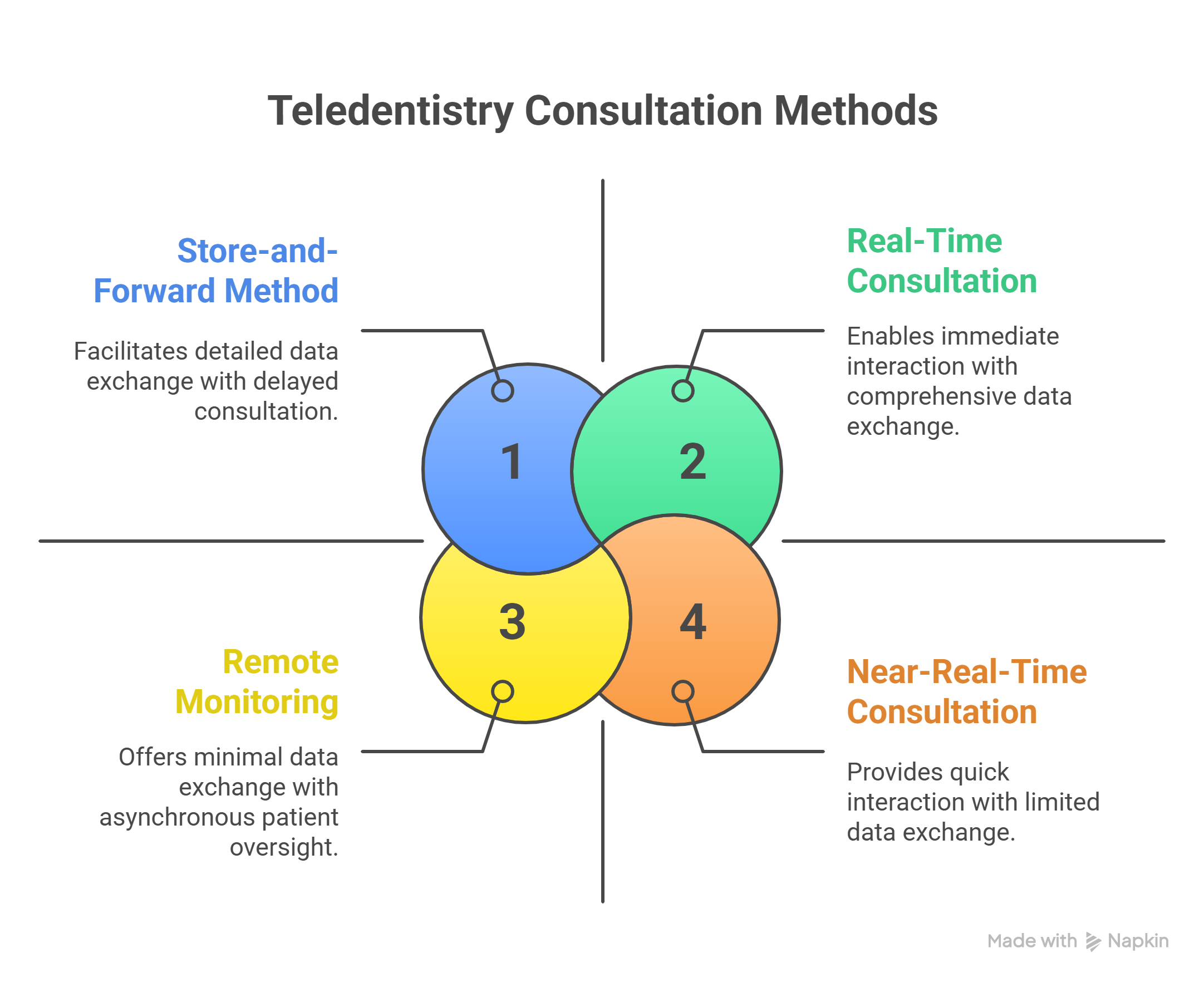
Originally conceived as part of the dental informatics blueprint, derived from Baltimore's 1989 conference sponsored by the Westinghouse Electronics Systems Group, teledentistry evolved [9]. The main emphasis was on a conversation about how dental informatics can be utilized in dental practice to influence oral healthcare delivery directly. [Aimed to improve patient care, dental education, and effectuation of the communication between dentists and dental laboratories], the birth of teledentistry as a subspecialist field of telemedicine can be connected to 1994 and a military project of the United States Army (U.S. Army's Total Dental Access Project). This military research demonstrated that teledentistry provided comprehensive information necessary for in-depth studies, extended dental treatment to remote and rural areas, and reduced overall patient care expenditures [10]. Teledentistry now presents fresh possibilities as technology develops. The dynamics of dental care delivery are shifting with the help of current technologies. Teledentistry will present new opportunities to elevate the standard of patient care and transform existing business practices [11]. "Real-time Consultation" and "Store-and-Forward Method" are two methods by which teleconsultation via teledentistry can be conducted [12]. Real-time consultation is a video conference that enables dental practitioners and patients at separate sites to see, hear, and interact with each other. Under the Storeand-Forward Method, the dental practitioner exchanges clinical data with stationary photographs that have been gathered and stored Figure 1. They then forward these for consultation and treatment planning [13].
Suppose the patient is absent from the consultation. In that case, dentists can communicate patient information, radiographs, graphical representations of periodontal and hard tissues, treatments performed, laboratory results, comments, pictures, and other information that is transportable across multiple providers. For patients, particularly those requiring specialized care, this data exchange may be crucial [14]. Known as the "Remote Monitoring Method," a third approach has also been proposed, whereby patients are monitored remotely from a distance and may be either home-based or hospital-based. The literature has also referenced a "NearReal-Time" consultation with low-resolution, low-frame-rate products resembling twitchy television [15].

Oral Medicine and Diagnosis: Teledentistry has been proven effective for diagnosing oral lesions and providing remote care through digital image transmission, aiding underserved populations.
Oral and Maxillofacial Surgery: Telemedicine provides reliable consultations for impacted molars and dentoalveolar surgery, enhancing pre-operative assessments, particularly when patient transportation is challenging.
Endodontics: Remote diagnosis of root canal orifices and periapical lesions through teledentistry can match the accuracy of in-person evaluations, reducing costs and providing timely assistance.
Orthodontics: Teledentistry facilitates early orthodontic treatment by enabling general dentists to consult specialists . remotely, thereby improving access to care for underserved patients and reducing the number of inappropriate referrals.
Prosthodontics: Videoconferencing aids diagnosis and treatment planning for prosthetic needs, particularly in remote areas where access to specialists is limited.
Periodontics: Teledentistry consultations for periodontal surgery and follow-up care have been successfully conducted remotely, reducing the need for patients to travel.
Pediatric and Preventive Dentistry: Teledentistry proves effective for dental caries screening in young children, offering a cost-efficient and convenient method for early detection of dental issues, especially in underserved areas.
The transfer of medical histories and documents, as well as the general security concerns associated with storing electronic information in computers, have raised concerns regarding the confidentiality of dental information. Teledentistry practitioners must exercise the uttermost caution to prevent unauthorized entities from invading patient privacy. Nevertheless, patients should be informed that their information can be intercepted, despite the best efforts to ensure its security, as it is to be transmitted electronically. Issues may also arise regarding the appropriate approach to informing patients of the potential transmission of their data. Informed consent in teledentistry should encompass all the elements of a conventional, traditional consent form. The patient should be informed of the potential risks associated with an incorrect diagnosis and/or treatment resulting from the technology's failure [16],[17]. In the practice of teledentistry, it is also necessary to consider medicolegal an copyright issues. The absence of well-defined standards is the primary cause of these issues. Currently, there is no method to ensure the quality, safety, efficacy, or effectiveness of information or its exchange. Electronic commerce is associated with privacy and security concerns, as well as remuneration, fiscal, and taxation issues. Numerous legal matters, including jurisdiction, licensure, and malfeasance, remain unresolved by the legislative or judicial branches of various governments [18].
Teledentistry and Smart Diagnostic Tools:
Teledentistry enhances dental care in remote areas using advanced diagnostic tools:
Digital Radiography & Intraoral Cameras: Capture high-quality oral images for remote examination. AI Image Analysis: AI algorithms accurately detect cavities, anomalies, and oral diseases with precision and accuracy.
Teledentistry Platforms (e.g., Teledentix): Enable remote diagnosis and treatment planning. Specialized Applications Oral & Maxillofacial Surgery: Video consultations, 3D imaging, and CBCT for evaluating fractures, impacted teeth, and abnormalities.
Endodontics: AI-assisted analysis of radiographs to detect root canal issues and periapical lesions.
Orthodontics: Remote monitoring with intraoral scanners, AI-driven treatment plans, and teleconsultations for malocclusion tracking.
Prosthodontics: CAD/CAM for designing crowns, bridges, and dentures remotely.
Periodontics: Intraoral cameras and digital health tracking for gum disease assessment and post-surgical healing monitoring.
Pediatric & Preventive Dentistry Children’s Intraoral Cameras and Fluorescence Imaging: Early Caries Detection through Remote Screening.
Wearable Sensors: Monitor oral health markers like halitosis, gum condition, and plaque. Cloud-Based Health Records: Store and share preventive care data for remote follow-ups.
AI-Integrated Teledentistry AI-driven platforms analyze images, track treatment progress, and detect dental issues. Mobile apps allow patients to upload oral images for instant remote evaluations.
Teledentistry enhances accessibility, improves diagnostics, and ensures timely treatment through the use of technology.
Although their broad popularity may be limited, smart diagnostic technologies and teledentistry have the potential to enhance patient treatment. Lacking the right technologies globally raises issues. In undeveloped regions lacking fast internet, phones, PCs, or other devices, teledentistry may prove ineffective. Patients lacking the required tools or knowledge may find remote dental consultations challenging, thereby limiting their advantages [19].
Still, another limit is based on digital imaging and diagnostic instruments used in medical judgments. Interesting research even emerges from AI-driven systems and flawed digital images. Depending on the interpretation of photos or the absence of minor dental changes, these technologies may lead to misdiagnosis or delayed treatment.
AI systems rely on continuous training using high-quality data to ensure accuracy; however, data availability may vary, which can lead to diverse diagnosis conclusions [20]. Most of these locations lacking explicit policies and procedures also have another problem. Policy on teledentistry vary country or state. Payment regulations, disproportionate licensing requirements, and remote diagnostics standards can all contribute to preventing the effective utilization of teledentistry. Personal visits will ontinue to be required because remote technology cannot efficiently conduct complex dental procedures or those requiring tactile exams [21].
Among the challenges are data security and patient confidentiality. Patient data is vulnerable to hackers and breaches despite advances in encryption and data security. HIPAA and GDPR compliance are crucial, but not every telemedicine platform can attain such high standards, which may lead to moral and legal challenges. Informed authorization is another challenge, as patients must be aware of the risks associated with electronically sharing their confidential medical records [22].
Despite its speed and accuracy, teledentistry can never replace physical examination and firsthand experience. Thorough treatment involves diagnostic equipment such as direct patient observation of the oral cavity—far from replicable online and palpation. Specialties that require presence, such as advanced restoratives or oral surgery, see teledentistry as an exception [23].
Although advanced diagnostic devices and teledentistry offer numerous advantages, their overall acceptability remains relatively low. One very crucial problem is the security of data. HIPAA and other confidentiality regulations must be adhered to by teledentistry platforms, as patient data is stored and transmitted electronically to secure private information from unauthorized access.
Furthermore, dental professionals and patients must receive proper training to utilize these technologies effectively.
In addition to growing uncertainty, there is a lack of regular laws and regulations governing telehealth approaches, particularly in light of concerns about licensing and jurisdiction. Robust legislative advancements, technical innovations, and education will help address these issues to maximize the effectiveness and widespread adoption of teledentistry [24].
Notwithstanding these challenges, the combination of digital diagnostics and teledentistry holds great promise for the future of dental treatment. Especially for disadvantaged groups, the synergy between digital platforms and diagnostic tools will enhance the quality and accessibility of therapy as technology continues to advance.
The timeliness of intervention and remote diagnosis of disorders can help reduce variations in oral healthcare availability. Moreover, the costeffectiveness of teledentistry, combined with the precision of AI-powered diagnostics, enables more effective therapy planning and enhanced patient outcomes.
Within the broader context of telehealth, the purpose of teledentistry will continue to evolve as the profession advances, thereby encouraging a more patient-centered and proactive approach to dental care.
Teledentistry and improved diagnostics can revolutionize dentistry, but challenges remain. These technologies have the potential to revolutionize dentistry by enhancing treatment, diagnosis, and prevention. The next concerns include legal and regulatory issues, patient data security, and training for both patients and healthcare professionals on these technologies. These innovations will make dental care more accessible, effective, and patient-centered.