
Oral Sphere
Journal of Dental and Health Sciences

Journal of Dental and Health Sciences
Received: 2026-04-02
Accepted: 2026-06-22
Published: 2026-07-01
Pages: 162-167
Background: The level of satisfaction in patients undergoing removable dental prosthesis (RDP) therapy is a key indicator of treatment success. Factors such as functional improvement, aesthetics, comfort and maintenance of oral hygiene significantly contribute to the overall effectiveness of the treatment.
Objective: To evaluate the satisfaction and expectations of patients regarding the use of removable dental prosthesis provided at AIMST Dental Clinic as well as to assess the association between patient satisfaction and oral hygiene.
Materials and Methods: A cross-sectional study was conducted among 60 patients who had received removable dental prosthesis. A structured questionnaire was used to assess the satisfaction level with aesthetics, comfort, speech and mastication along with oral hygiene awareness and fulfillment of expectations. The data was analyzed using descriptive statistics and are presented as percentages.
Results: Out of 60 participants, 52 (86.7%) were satisfied with the aesthetics, fit, and comfort of their prostheses, while 8 participants (13.3%) expressed dissatisfaction. Regular cleaning practices were followed by 58 patients (96.7%). Additionally, relining on the prosthesis was required after more than two years in 28 patients. (46.7%).
Conclusion: The majority of patients found to be satisfied with the removable dental prosthesis provided at AIMST Dental Clinic. Improvement in function, aesthetic outcomes and effective patient education significantly influenced the satisfaction level in patients. Augmented communication and enhanced follow-up care can further improve the outcomes.
The fundamental goal in prosthodontic therapy is patient satisfaction which serves as an indicator of any type of successful treatment [1]. The removable dental prosthesis is designed to restore mastication, speech and aesthetics and overall oral health to enhance the quality of life [2]. There are several studies that have demonstrated the importance of patient centred outcomes as clinical parameters in the evaluation of the success of prosthesis [3].
Denture fit, retention, stability, residual ridge morphology, prosthesis design, and distribution of occlusal forces are the factors that influence the satisfaction level of patients [4]. In addition, aesthetic factors and psychological adaptation play an essential role in prosthesis acceptance [5].
Previous research has shown that the level of satisfaction in patients undergoing removable dental prosthesis (RDP) therapy is significantly related to functional improvements in mastication and phonetics [6]. Maintaining oral hygiene also plays an essential role in patient’s comfort and long-term prosthesis success [7].
Several studies have demonstrated a strong relationship between patient satisfaction and improvements in functional outcomes, particularly mastication and phonetics [8]. Effective chewing ability enhances nutritional intake, while improved speech contributes to better communication and social confidence. These functional benefits are essential for the overall success of prosthodontic treatment. Additionally, the maintenance of good oral hygiene is a crucial factor in ensuring both patient comfort and the longevity of the prosthesis [9]. Inadequate hygiene practices can lead to complications such as denture stomatitis, halitosis, and plaque accumulation, which negatively affect patient satisfaction and oral health [10].
Although much has been documented on implant-supported prostheses and overdentures, there are fewer studies that have focused on patient’s expectations and satisfaction with conventional removable dental prostheses in local dental clinical practices [11],[12]. Therefore, this study is of interest to describe and examine the patient’s satisfaction with removable dental appliances that have been provided at AIMST Dental Clinic and assess the relationship between satisfaction and oral hygiene practices.
The study was conducted at AIMST Dental Clinic in a cross-sectional survey of patients who undergo removable dental prosthesis (RDP). A total of 60 participants were selected with a specific inclusion criterion of using the prosthesis for at least three months, to set the time for the patient to get used to the prosthesis and to assess the prosthesis performance. This duration was considered to allow patients to form a consistent assessment of their prosthesis.
The participants were inquired to answer a questionnaire through Google Forms. This questionnaire was designed to evaluate a number of factors including patient satisfaction with the appearance, mastication (chewing), phonetics (speaking), fit and comfort, their knowledge and oral hygiene practices, expectation of pre-prosthetic treatment and use of prosthesis and relining. Each attribute was evaluated separately to allow comprehensive assessment of patient satisfaction with both functional and psychosocial attributes.
We used IBM SPSS Statistics (Version XX; IBM Corp., Armonk, NY, USA) software for data analysis. We verified the data for accuracy and completeness. Descriptive statistics were used to summarise the sample and these were reported using frequencies and percentages for clarity. We used the Chi-square test of independence to test the association of patient satisfaction with gender. We set the significance level at p < 0.05.
Out of 60 participants, 52 patients (86.7%) reported satisfaction with the aesthetics, fit, and comfort of their removable dental prostheses, while the remaining 8 patients (13.3%) expressed dissatisfaction Table 1. The high rate of overall satisfaction indicates an effective clinical protocol and successful prosthetic rehabilitation.
| Satisfaction Status | Number of Patients | Percentage |
|---|---|---|
| Satisfied | 52 | 86.7% |
| Dissatisfied | 8 | 13.3% |
| Total | 60 | 100% |
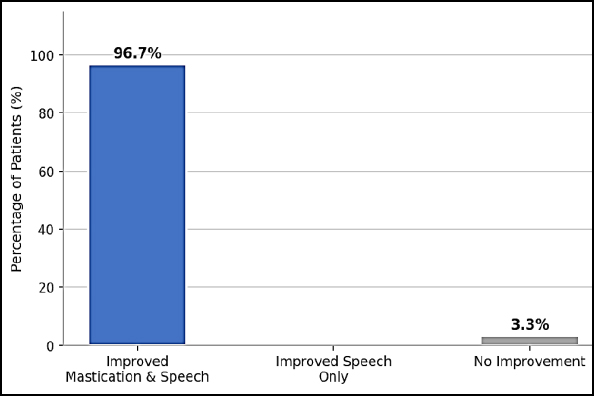
Functional improvement was reported by the overwhelming majority of participants Figure 1. Specifically, 58 patients (96.7%) reported concurrent improvements in both mastication and speech following prosthetic rehabilitation. The remaining 2 patients (3.3%) reported improvement in speech alone, with no notable enhancement in chewing ability. Notably, no participant reported deterioration in either mastication or phonetic function, affirming that the removable dental prostheses provided by the clinic were highly effective in restoring oral function.
Prior to treatment, 93.3% of patients reported having high expectations regarding the outcome of their removable dental prosthesis therapy. Upon treatment completion, 86.7% of participants confirmed that their expectations had been met, while 13.3% indicated that their expectations were not fully fulfilled. The alignment between pre-treatment expectations and post-treatment satisfaction underscores the importance of effective communication and patient counselling during the prosthetic treatment planning phase.
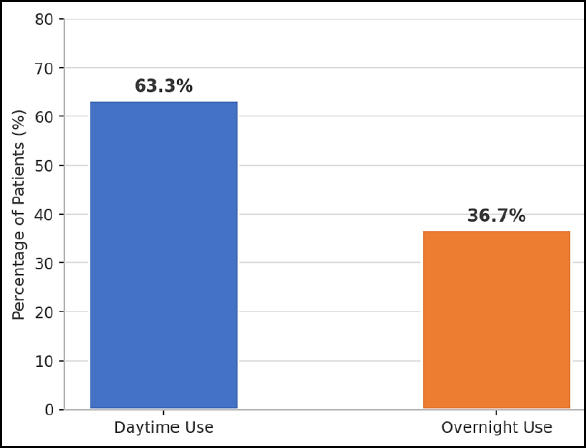
Analysis of appliance usage patterns revealed that 63.3% of patients preferred wearing their prosthesis exclusively during daytime hours, whereas 36.7% reported overnight use Figure 2. The preference for daytime use was primarily attributed to greater comfort and convenience, particularly during meals and routine oral hygiene maintenance.
A high level of compliance with oral hygiene practices was observed among participants. 96.7% of patients (n = 58) reported cleaning their prostheses regularly, demonstrating a strong awareness of hygiene maintenance. This notable compliance reflects the effectiveness of post-insertion instructions and follow-up education provided.
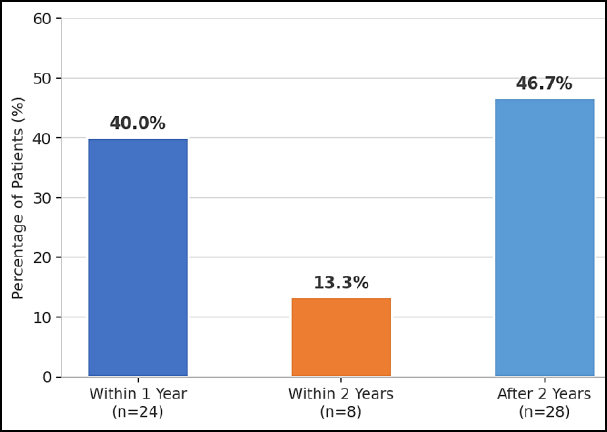
Relining requirements varied among participants and were classified into three time-based categories Figure 3. The largest proportion of patients 28 patients (46.7%) required relining only after more than two years of prosthesis use, indicating satisfactory long-term prosthetic stability. 24 patients (40.0%) required relining within the first year, which may be attributed to accelerated alveolar ridge resorption or prosthesis-related adaptation challenges. The remaining 8 patients (13.3%) required relining within two years of use.
Among the 8 dissatisfied patients (13.3%), the reported causes of dissatisfaction were primarily associated with the early post-insertion adaptation period rather than prosthesis failure. Contributing factors included initial discomfort during the adaptation phase, difficulty chewing certain food textures, speech adjustment difficulties in the early weeks of use, and psychological factors such as self-consciousness or embarrassment. These challenges are consistent with the known neuromuscular and proprioceptive adaptation process inherent to removable prosthesis therapy and were largely transient in nature.
| Gender | Satisfied | Dissatisfied | Total |
|---|---|---|---|
| Male | 24 | 4 | 28 |
| Female | 28 | 4 | 32 |
| Total | 52 | 8 | 60 |
A Chi-square test of independence was performed to examine whether gender had a statistically significant influence on patient satisfaction with removable dental prostheses. The analysis revealed no statistically significant association between gender and satisfaction (χ² = 0.02, p > 0.05) Table 2. Both male and female participants reported comparable satisfaction levels, suggesting that satisfaction outcomes are more strongly determined by functional factors such as improvements in mastication, comfort, and fulfilment of expectations than by demographic characteristics.
In this study, a high percentage of patients (86.7%) were satisfied with removable prostheses delivered at AIMST Dental Clinic. This rate was in agreement with 75% to 90% reported in the prosthodontic literature. A systematic review of 35 studies evaluating removable partial dentures by Awawdeh M et al. (2024) [13] found satisfaction rates ranging from 50% to 81%, with the greatest impact on patient satisfaction reported to be due to clinical protocols, patient education and post-insertion follow-up. The high satisfaction rate in the present study might be related to the patient education and follow-up at AIMST Dental Clinic. Additionally, Al-Quran et al. (2019) [2] reported that most patients with removable partial dentures were satisfied, with no significant differences between ages and sexes, suggesting that clinical parameters and prosthodontic issues are more relevant in determining satisfaction than age and sex.
Likewise, Tosun and Uysal (2024) [14] evaluated oral health-related quality of life and patient satisfaction in removable denture wearers using the OHIP-14 questionnaire and visual analogue scale and found that retention and functional satisfaction were the most important factors that influenced patient satisfaction, independent of the type of prostheses.
Improved mastication and speech were reported by 96.7% of the sample and this was a very consistent and clinically relevant finding. Elagra et al. (2025) [15] conducted a cross-sectional study at the University of Jordan, with 90 participants, to assess the effect of removable prostheses on chewing ability and oral health-related quality of life. They found that treatment with removable partial and complete dentures led to statistically significant improvement in chewing ability and OHRQoL with no significant effect of gender and sociodemographic variables on the outcomes. These findings align with the fact that almost all the participants in our study reported improved function. In addition, Chiddarwar et al. (2024) [16] emphasised the importance of removable dental prostheses in the restoration of phonetics and masticatory function, especially in patients with resorbed ridges, and the direct association between functional rehabilitation and psychological and social wellbeing of denture wearers.
The current study reported that all the patients were satisfied with the aesthetics of prostheses, highlighting the psychosocial importance of denture rehabilitation. Gumus Ayaz et al. (2026) [17] described in a cross-sectional study of 300 patients who attended prosthodontic clinics of Batman University that dental aesthetics is significantly and positively associated with self-esteem and psychosocial well-being, as assessed by psychometric questionnaires, such as the Psychosocial Impact of Dental Aesthetics Questionnaire and the Rosenberg Self-Esteem Scale. They concluded that restorative and prosthetic treatments should consider both functional and psychological aspects of patients' needs. These results are consistent with our finding of universal high aesthetic satisfaction in the present study, and confirm that aesthetic satisfaction is an important measure of success in prosthetic rehabilitation.
Oral hygiene practices among the participants of the current study were satisfactory, with 96.7% reporting regular denture cleaning. This is an important finding given the high incidence of denture stomatitis associated with poor denture hygiene. Peric et al. (2024) [18] recently published a systematic review of predisposing factors, clinical features and aetiology of denture stomatitis, suggesting a global prevalence of 20% to 67% among removable denture wearers, with the major aetiological factors being continuous prosthesis wear and Candida biofilm formation through poor hygiene. Tosun B et al. (2025) [19] also found in their cross-sectional study at a Turkish university dental clinic that the presence of lesions in the oral mucosa of denture wearers was significantly affected by denture hygiene status, overnight wear and age of the denture, showing that patient education and compliance with cleaning protocols is essential for long-term denture use. The compliance rate of 91.67% in the current study was a result of effective counselling at AIMST Dental Clinic after the prosthesis was inserted.
In the current study, a 13.3% dissatisfaction rate was attributed more to the initial adaptation phase than to any inherent denture problems. The complaints included early discomfort, limited chewing ability for some types of food, speech adjustment during early stages of prosthesis usage and psychological embarrassment. The above observations are supported by Bors A et al. (2025) [20] who carried out a prospective randomised crossover clinical trial on the satisfaction between conventional complete and digital complete dentures in 40 patients, with a maxillary edentulism over a 12-month follow up period. Their research highlighted that dissatisfaction in the early period following insertion was mainly related to neuromuscular adaptation and managing patient expectations rather than to the quality of the prostheses. These findings align with the existing literature that shows early dissatisfaction is usually short-lived and can be managed via follow-up and counselling. Early dissatisfaction can be minimised by counselling patients about their expectations during the planning stage.
Prosthesis relining data in the current study showed 46.7% of patients required relining only after more than two years of prosthesis use, which is indicative of acceptable medium-term stability of the prosthesis, while 40% required relining within a year. These mixed relining patterns are in accordance with the chronic and progressive nature of residual alveolar ridge resorption, well documented in the literature. Chitlange et al. (2024) [21] emphasised that unstable and ill-fitting complete denture prostheses are the most frequent complication encountered in patients with resorbed ridges, with retention, support and stability of dentures negatively impacted by progressive alveolar bone resorption. Sadek et al. (2025) [11] also confirmed in a scoping review that residual ridge resorption occurs with the highest rate during the first 6 months after tooth extraction, followed by a continuous but slower rate of bone loss for the rest of the life, and the rate of bone loss is affected by individual biological and systemic variations. These insights explain the varying times for relining among the study subjects above as patients with greater intrinsic bone resorption rates would need to have their dentures relined sooner.
This study's chi-square analysis (χ² = 0.02, p > 0.05) also revealed no significant association between gender and patient satisfaction with both men and women reporting similar satisfaction levels. This was similarly reported by Jelicic et al. (2025) [23] who assessed the oral health-related quality of life (OHRQoL) in 313 patients with fixed, removable and combined prostheses in Croatia using the validated OHIP-CRO14 questionnaire and found that gender was not significantly associated with OHRQoL. Shala KS et al. (2016) [24] also indicated in their systematic review that while women reported greater aesthetic satisfaction with RPDs in some studies, no consistent statistically significant difference in satisfaction between men and women was found across the studies. These studies confirm that sex is not a significant predictor of the satisfaction with removable dental prostheses, which is instead primarily determined by the function of the prosthesis, stability and achievement of treatment goals.
The current study has some limitations. Although the sample size (n = 60) is sufficient for an initial institutional study, it reduces statistical power and may affect the extrapolation of results to larger populations. The cross-sectional nature of the study does not allow causal inference or tracking of changes in satisfaction over time. The use of self-reported questionnaire responses might have introduced social desirability bias and a lack of validated tools such as the OHIP-EDENT makes it difficult to compare with other published studies. A larger and more representative sample of patients, longitudinal follow-up and the use of established patient-reported outcome questionnaires would help better understand the factors that contribute to long-term satisfaction with removable dental prostheses among Malaysian patients.
There are some limitations to the present study. The small sample size (n = 60) limits the statistical power and generalisability of our findings. The cross-sectional design precludes causality and longitudinal tracking of satisfaction. Also, the data obtained from self-administered questionnaires may be prone to recall and social desirability bias. Future studies with a larger, more representative sample, psychometrically sound questionnaires (such as the OHIP-EDENT) and longitudinal follow-up would better evaluate the factors and trends of patient satisfaction with removable dental prostheses. But the findings of this study offer some clinical insights into the success of prostheses in the university dental clinic setting in Malaysia, about which there are few published reports.
This research shows most patients at AIMST Dental Clinic who receive removable dental prostheses are satisfied with their treatment. Satisfaction is impacted by the improvement in function, aesthetics, comfort and awareness of oral hygiene. While a minority of patients were dissatisfied, this was mainly due to initial adaptation issues, not prosthesis failure. Improved communication, expectations setting and aftercare may help increase satisfaction levels.
