Oral Sphere
Journal of Dental and Health Sciences

Journal of Dental and Health Sciences
Received: 2026-04-05
Accepted: 2026-06-05
Published: 2026-07-01
Pages: 193-200
Dental caries remains a major global oral health problem, and fluoride therapy continues to be the most effective and evidence-based preventive strategy. This review evaluated the mechanisms, delivery methods, clinical effectiveness, safety, and recent advances in fluoride therapies for caries prevention. Fluoride enhances enamel remineralization, inhibits demineralization, and suppresses cariogenic bacterial activity. Systemic fluoride methods such as water fluoridation and topical therapies including fluoridated dentifrices, varnishes, gels, foams, mouth rinses, and high-fluoride toothpastes have demonstrated significant reductions in caries prevalence. Silver diamine fluoride has also emerged as an effective minimally invasive option for arresting active carious lesions. Although fluoride is highly effective, proper dosage and supervised use are important to minimize the risk of dental fluorosis. Recent advances involving fluoride-releasing materials, calcium-phosphate systems, and personalized risk-based approaches are further improving preventive outcomes. Overall, fluoride therapies remain the cornerstone of modern caries prevention and support sustainable, minimally invasive oral healthcare strategies.
Dental caries is still among the most common chronic diseases across the globe with all the very high prevalence ages notwithstanding the immense development witnessed in the area of preventive dentistry [1]. It is a multifactorial disease that is caused by an active interaction of cariogenic microorganisms, fermentable carbohydrates, host factors, and time [2]. Despite the fact that restorative methods are able to deal with the implications of caries, prevention is still the key to oral health in the longterm [3]. Among all the preventive measures, fluoride therapy remains the most widely researched, economical and evidence-based caries prevention intervention [4]. Fluoride has anticariogenic effect that occurs in several ways whereby it increases enamel remineralization, demineralization and bacterial metabolism [5]. On the tooth surface, fluoride enhances the development of fluorapatite or fluorhydroxyapatite that is less dissolvable in acid compared to hydroxyapatite [6]. Further, fluoride disrupts the cariogenic bacteria like Streptococcus mutans enzyme activity and decreases the production of acid and biofilm virulence [7]. These processes act at low chronic fluoride levels mostly and it is significant that topical doses of fluoride need to be taken often, but not in large amounts [8]. Community based fluoride delivery systems such as water fluoridation, fluoridated salt and milk fluoridation programs have over the last few decades contributed a great deal to the caries prevalence among the people [9]. The prevalence of fluoride-containing dentifrice on the other hand has led to significant caries reduction on a global scale [10]. Nevertheless, the shifting epidemiology of dental caries, polarisation of caries, more caries in old age of the roots, and caries in early childhood of high-risk groups requires a re-evaluation of the means of delivering fluoride and its efficacy in clinical practice [11]. There is a multitude of professional and over-the-counter professional and self-administered fluoride treatments in modern dental practice, such as fluoride varnishes, fluoride gels, fluoride foams, fluoride mouth rinses, silver diamine fluoride, and high-fluoride prescription dentifrices [12]. Their preventive capacity has been further amplified by the development of fluoride formulations, delivery vehicles and application guidelines [13]. Besides, fluoride treatments are also becoming a part of risk-based caries management strategies, and this approach is consistent with contemporary ideas of minimal intervention dentistry and personalized oral healthcare [14]. The strong body of evidence that supports the use of fluorides notwithstanding, issues surrounding dental fluorosis, the correct dose and safety especially among the children still find their way into the minds of the people and the medical fraternity when making such a choice [15]. Furthermore, the new evidence of new fluoride compounds, bioactive materials, and the combination of these materials and calcium-phosphate technologies presents the necessity of new and more thorough assessment of fluoride therapies [16]. Thus, the purpose of this review is a critical and synthesizing examination of the existing evidence on fluoride therapies in the prevention of carries, including their modes of action, modes of delivery, clinical effectiveness and safety [17]. This review aims to inform clinicians, researchers, and policymakers to maximize the benefits of fluoride use in the effective and sustainable caries prevention of various populations by offering a new evidence-based look at the issue [18].
Fluoride plays a pivotal role in caries prevention through its effects on the tooth structure and oral microbiota [19]. The primary mechanism involves the enhancement of enamel remineralization and inhibition of demineralization [20]. When fluoride is present in the oral environment, it facilitates the deposition of calcium and phosphate ions into demineralized enamel, forming fluorapatite or fluorhydroxyapatite, which is more resistant to acid dissolution than hydroxyapatite [21]. Additionally, fluoride acts on cariogenic bacteria by inhibiting enolase and proton-translocating ATPases, thereby reducing acid production and bacterial metabolism [22]. These effects are most effective when fluoride is present at low concentrations continuously, highlighting the importance of topical fluoride exposure [23] (Table 1).
| Aspect | Mechanism of Action of Fluoride |
|---|---|
| Effect on Enamel | Enhances enamel remineralization and inhibits demineralization of tooth structure. |
| Mineral Deposition | Facilitates deposition of calcium and phosphate ions into demineralized enamel. |
| Crystal Formation | Promotes formation of fluorapatite or fluorhydroxyapatite, which is more resistant to acid dissolution than hydroxyapatite. |
| Action on Bacteria | Inhibits bacterial enzymes such as enolase and proton-translocating ATPases. |
| Effect on Acid Production | Reduces acid production by cariogenic bacteria, thereby decreasing enamel demineralization. |
| Effect on Oral Microbiota | Suppresses bacterial metabolism and reduces virulence of cariogenic biofilm. |
| Mode of Action | Most effective at low, sustained concentrations in the oral environment. |
| Clinical Implication | Emphasizes the importance of frequent topical fluoride exposure for caries prevention. |
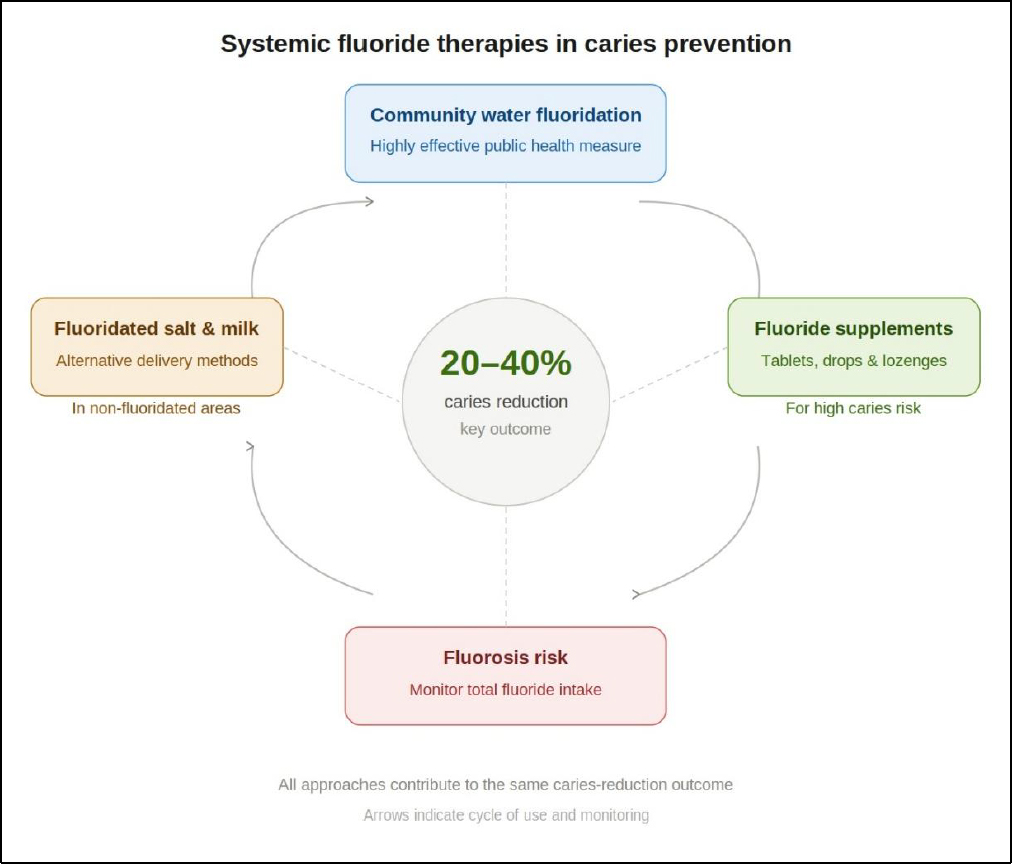
Systemic fluoride delivery has historically played a significant role in population-level caries prevention [24]. Community water fluoridation remains one of the most effective and equitable public health measures, reducing caries prevalence by approximately 20–40% in both children and adults [25]. Alternative systemic methods such as fluoridated salt and milk have been implemented in regions where water fluoridation is not feasible [26]. Fluoride supplements in the form of tablets, drops, or lozenges are prescribed selectively for individuals at high caries risk living in non-fluoridated areas [27]. However, the use of systemic fluoride requires careful consideration of total fluoride exposure to minimize the risk of dental fluorosis, particularly during enamel formation [28] (Figure 1).
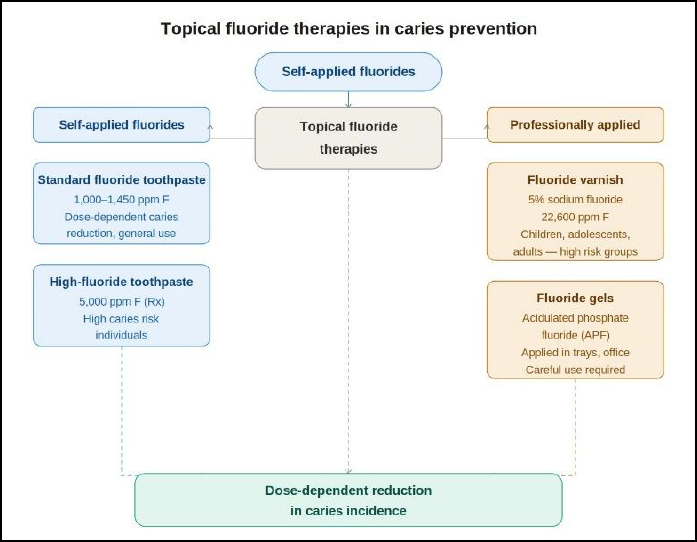
Topical fluoride therapies constitute the cornerstone of modern caries prevention strategies. Fluoridated dentifrices are the most widely used form, with strong evidence demonstrating a dose-dependent reduction in caries incidence [29]. Standard toothpastes containing 1,000–1,450 ppm fluoride are effective for the general population, while high-fluoride dentifrices (5,000 ppm) are recommended for individuals with high caries risk, including adolescents with orthodontic appliances and older adults with root caries [30] (Figure 2).
Professionally applied topical fluorides include gels, foams, and varnishes. Fluoride varnishes, typically containing 5% sodium fluoride (22,600 ppm), are particularly effective due to prolonged contact time with enamel and ease of application [31]. Evidence supports their use in preventing caries in children, adolescents, and high-risk adults. Acidulated phosphate fluoride (APF) gels and foams are also effective but require controlled application to avoid ingestion and potential soft tissue irritation [32].
| Aspect | Silver Diamine Fluoride (SDF) |
|---|---|
| Description | A topical fluoride agent used to arrest active carious lesions. |
| Target Population | Pediatric patients, geriatric patients, and individuals with special healthcare needs. |
| Composition | Combines antibacterial properties of silver with the remineralizing effect of fluoride. |
| Mechanism of Action | Silver inhibits cariogenic bacteria; fluoride promotes remineralization of tooth structure. |
| Clinical Effectiveness | Demonstrates high rates of caries arrest as supported by clinical studies. |
| Clinical Indication | Management of active carious lesions using a minimally invasive approach. |
| Limitation | Causes black staining of carious lesions, limiting use in anterior aesthetic zones. |
| Clinical Significance | Recognized as an effective component of minimally invasive caries management. |
Silver diamine fluoride has emerged as a highly effective agent for arresting active carious lesions, especially in pediatric, geriatric, and special healthcare needs populations [33]. SDF combines the antibacterial properties of silver with the remineralizing effects of fluoride. Clinical studies consistently demonstrate high rates of caries arrest following SDF application. Despite its proven efficacy, aesthetic concerns related to black staining of carious lesions limit its acceptance in anterior teeth. Nonetheless, SDF is increasingly recognized as a valuable component of minimally invasive caries management [34] (Table 2).
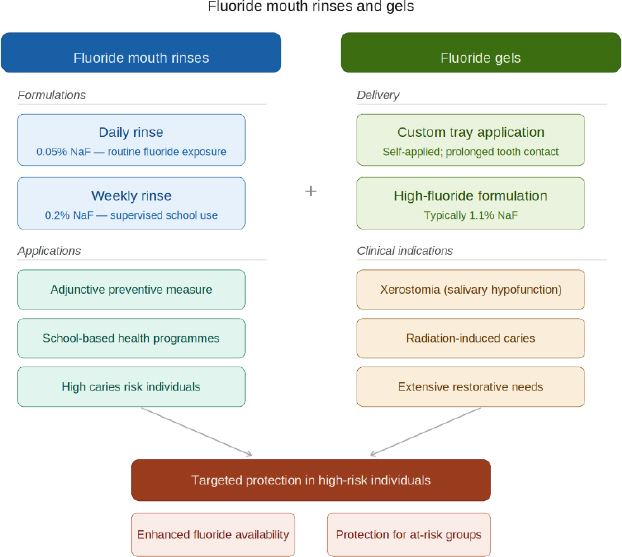
Fluoride mouth rinses, available in daily low-dose or weekly high-dose formulations, are beneficial as adjunctive preventive measures, particularly for school-based programs and high-risk individuals [35]. Self-applied fluoride gels using trays are recommended for patients with xerostomia, radiation-induced caries, or extensive restorative needs [36]. These delivery methods enhance fluoride availability and provide targeted protection in vulnerable populations [37] (Figure 3).
While fluoride is highly effective, its use must be balanced against the risk of dental fluorosis. Mild fluorosis is generally considered a cosmetic concern with no functional impairment, whereas moderate to severe forms can affect aesthetics [38]. Current evidence supports the safe use of fluoride when applied according to age-appropriate guidelines and risk-based protocols. Parental supervision of tooth brushing in young children and appropriate dosing of fluoride products are essential preventive measures [39] (Table 3).
| Aspect | Safety, Dosage, and Fluorosis Risk |
|---|---|
| Effectiveness of Fluoride | Highly effective in caries prevention when used appropriately. |
| Potential Risk | Excessive fluoride intake may lead to dental fluorosis. |
| Mild Fluorosis | Primarily a cosmetic concern with no functional impairment. |
| Moderate–Severe Fluorosis | Can adversely affect dental aesthetics. |
| Safety Guidelines | Safe when used according to age-appropriate recommendations and risk-based protocols. |
| Preventive Measures | Parental supervision of toothbrushing in young children. |
| Dosage Control | Use of appropriate fluoride concentration and quantity in dental products. |
| Clinical Importance | Balancing preventive benefits with minimization of fluorosis risk. |
Recent research has focused on optimizing fluoride delivery through novel formulations and synergistic combinations [40]. Fluoride-releasing restorative materials, calcium-phosphate-based systems, and bioactive glasses aim to enhance remineralization while maintaining sustained fluoride release. Personalized, risk-based fluoride therapy aligned with minimal intervention dentistry represents the future of caries prevention [41] (Table 4).
| Aspect | Emerging Trends and Future Directions in Fluoride Therapy |
|---|---|
| Research Focus | Optimization of fluoride delivery using advanced formulations and technologies. |
| Fluoride-Releasing Materials | Restorative materials capable of sustained fluoride release for long-term protection. |
| Calcium-Phosphate Systems | Enhance remineralization by supplying bioavailable calcium and phosphate ions along with fluoride. |
| Bioactive Glasses | Promote enamel remineralization and controlled fluoride release at the tooth surface. |
| Synergistic Approaches | Combination of fluoride with remineralizing agents for improved anticaries efficacy. |
| Personalized Therapy | Risk-based fluoride application tailored to individual caries susceptibility. |
| Clinical Philosophy | Integration with minimal intervention dentistry principles. |
| Future Outlook | Focus on preventive, patient-specific, and biologically driven caries management strategies. |
Fluoride remains the cornerstone of modern caries prevention, offering robust evidence for both population-level and individualized interventions [42]. Its mechanisms enhancing enamel remineralization, inhibiting demineralization, and suppressing bacterial metabolism underpin its clinical effectiveness across a wide range of delivery methods. The formation of fluorapatite and fluorhydroxyapatite provides enamel with increased resistance to acid attack, while inhibition of bacterial enzymes reduces biofilm virulence, demonstrating fluoride’s dual biological and chemical actions [43].
Systemic fluoride therapies, such as community water fluoridation, fluoridated salt, and milk, have historically demonstrated significant reductions in caries prevalence, estimated at 20–40% across populations [44]. These measures remain highly effective in public health terms, especially in areas with limited access to dental care [45]. However, systemic fluoride delivery must be carefully monitored to avoid overexposure and the risk of dental fluorosis, particularly during enamel formation. Prescribed fluoride supplements serve as targeted interventions for high-risk individuals in non-fluoridated regions, emphasizing the importance of risk-based protocols [46].
Topical fluoride therapies have emerged as the principal preventive approach in contemporary dentistry [47]. Fluoridated dentifrices, varnishes, gels, foams, and mouth rinses allow for precise, controlled delivery of fluoride at the tooth surface, achieving maximum remineralization potential while minimizing systemic exposure [48]. Professional application of fluoride varnishes (5% NaF) provides prolonged contact with enamel, particularly beneficial in children, adolescents, and high-risk adults [49]. High-fluoride prescription toothpastes further support preventive care in patients with elevated caries risk, including those with orthodontic appliances, xerostomia, or root caries [50]. Fluoride mouth rinses and gels complement daily oral hygiene practices, providing adjunctive protection in school-based and high-risk populations [51].
Silver diamine fluoride (SDF) represents a minimally invasive option for managing active carious lesions, combining the antibacterial effects of silver with fluoride-mediated remineralization [52]. Clinical studies consistently demonstrate high rates of caries arrest with SDF application, although aesthetic concerns due to black staining of lesions limit anterior use. Nonetheless, SDF’s effectiveness in pediatric, geriatric, and medically compromised populations highlights its potential in targeted caries management strategies [53].
The safety and dosage of fluoride remain critical considerations. While fluoride is highly effective, excessive exposure may lead to dental fluorosis, with mild forms generally considered cosmetic and moderate-to-severe forms affecting aesthetics. Risk-based fluoride use, parental supervision, and age-appropriate dosing protocols are essential for balancing preventive benefits with safety [54].
Emerging research in fluoride delivery focuses on optimizing clinical outcomes through novel materials and synergistic combinations [55]. Fluoride-releasing restorative materials, calcium-phosphate-based systems, and bioactive glasses aim to enhance enamel remineralization while maintaining sustained fluoride release [56]. Integration of personalized, risk-based fluoride therapy with minimal intervention dentistry represents the future of caries prevention, emphasizing individualized care, biological optimization, and minimally invasive management strategies [57].
Overall, the collective evidence supports a multimodal approach to fluoride therapy, combining systemic, topical, and innovative targeted methods. This approach not only maximizes caries prevention but also aligns with contemporary principles of evidence-based, patient-centered oral healthcare. Ongoing research into novel fluoride formulations and delivery systems is likely to further enhance preventive efficacy and safety, providing a robust framework for individualized and population-level caries management [58-61].
Fluoride therapies remain the most effective and evidence-based strategy for the prevention and management of dental caries. Both systemic and topical fluoride interventions have demonstrated significant reductions in caries prevalence across populations, while targeted therapies such as silver diamine fluoride and high-fluoride dentifrices provide effective solutions for high-risk individuals. Optimal use of fluoride requires careful attention to dosage, age, and risk status to maximize preventive benefits while minimizing the risk of dental fluorosis. Emerging trends in fluoride delivery, including bioactive materials, calcium-phosphate systems, and personalized, risk-based approaches, hold promise for enhancing remineralization, improving clinical outcomes, and supporting minimally invasive dentistry. Overall, integrating traditional and innovative fluoride therapies into individualized and population-level strategies offers a comprehensive framework for sustainable caries prevention and improved oral health globally.
